What counts as a safe DIY HVAC fix
Most true homeowner-safe HVAC fixes are not deep repairs. They are airflow and maintenance bottlenecks that can make a system perform badly even when nothing expensive has failed yet. This guide is for that lane: filter problems, outdoor condenser blockage, and condensate warning signs that help you decide whether you still have a DIY problem or a service call.
This guide is useful if
- Airflow feels weak or uneven and the filter may be overdue.
- The outdoor condenser is visibly crowded by leaves, lint, or seasonal debris.
- You see signs of moisture near the indoor unit and want to know whether observation is enough.
Do not use this page as a refrigerant, combustion, or electrical repair guide
If the problem includes burning smells, breaker trips, active leaking, gas or combustion concerns, or a system that gets worse every time it starts, move out of DIY and into professional diagnosis.
Why filter replacement is the safest place to start
Among common homeowner tasks, replacing the HVAC air filter gives the biggest upside for the lowest risk. Dirty filters reduce airflow, reduce efficiency, and can contribute to dirt buildup deeper in the system. That makes filter replacement the cleanest first decision when the system seems weak but nothing about it feels dangerous.
Why it helps
- Weak airflow at registers often starts with a loaded filter.
- Long run times and poor comfort can follow restricted airflow.
- A clean filter lowers the chance that dust keeps moving toward the indoor coil.
Better filtration is only better if the system can breathe
Higher-MERV filters can improve particle capture, but they also add resistance. The right homeowner move is the highest filter your system can handle without choking airflow, not the highest number on the shelf by default.
How to replace or upgrade the HVAC filter without creating a new problem
Basic filter replacement flow
- Turn the system off at the thermostat before opening the filter slot or return grille.
- Remove the old filter carefully and check the airflow arrow on the frame.
- Match the size and thickness first, then decide whether filtration efficiency should stay the same or move up slightly.
- Install the new filter with the arrow pointing toward the blower or air handler.
- Turn the system back on and listen for obvious whistling, rattling, or a filter that bows inward right away.
Upgrade carefully
- A standard pleated filter that matches the system's current size is the safest default.
- If you want stronger particle capture, move up carefully and pay attention to airflow after the change.
- If the cabinet supports a thicker media filter, that can be a better long-term path than forcing a very restrictive 1-inch upgrade.
When the outdoor condenser needs safe homeowner cleanup
A central AC or heat pump can look like it is failing when the real issue is that the outdoor coil cannot move air. Leaves, lint, cottonwood, grass clippings, and overgrown plants can make the unit run longer and feel strained during hot weather.
Start with the easiest airflow fix and stop when the issue turns technical
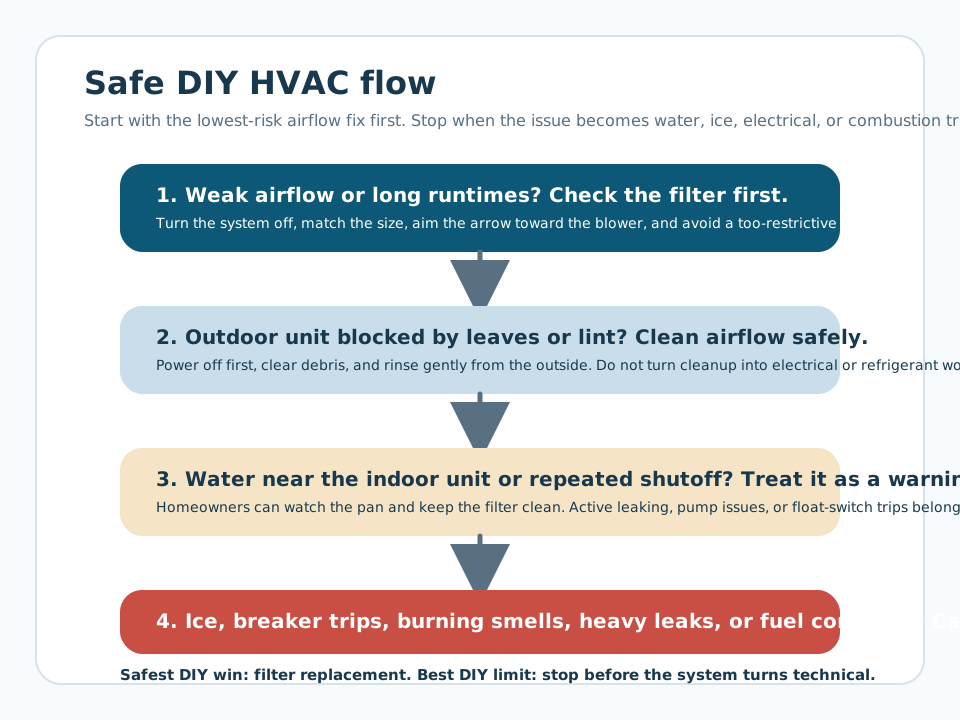
What you can usually do safely
- Trim vegetation back so the unit can breathe again.
- Remove leaves and loose debris from the base and coil face.
- Rinse the exterior coil gently after power is off.
Do not force the outdoor unit into a repair project
- Do not straighten badly damaged fins without the right tools and patience.
- Do not open electrical compartments unless you are trained for that work.
- Do not turn a no-cool problem into refrigerant guessing or breaker reset roulette.
What homeowners should know about condensate trouble
Drainage problems are different from filter and outdoor-airflow fixes because they cross into water damage and safety shutoff territory much faster. Your homeowner role is mostly observation, prevention, and knowing when the problem has become active enough that it needs a pro.
Common warning signs
- Water around the indoor unit or a wet secondary pan.
- Musty odor near the air handler during cooling season.
- Repeated shutoffs that may point to a float switch doing its job.
Prevent dust loading and watch the pan, but do not force a drain repair you do not understand
Keeping the filter clean can reduce dust moving into the coil and drain area. Beyond that, visible leaking, a condensate pump, or repeated safety shutoffs should be treated as service work, not a casual DIY experiment.
What homeowners usually need before they start
Basic supplies
- The correctly sized replacement filter for your existing slot or cabinet.
- A flashlight so you can read the old filter size and arrow direction clearly.
- A dust mask and eye protection if the old filter is visibly loaded.
- A rag or paper towels for the filter area and a garden hose for outdoor cleanup.
Useful example choices
- A standard pleated filter that matches the system's current size is the safest default.
- A moderate or higher-MERV filter can make sense when the system has enough airflow headroom.
- A thicker media filter can be a smarter upgrade path than an overly restrictive 1-inch filter, but only if the cabinet is built for it.
When DIY should end and the service call should begin
- There is active leaking, a soaked secondary pan, or repeated shutoff behavior.
- The system starts icing, trips a breaker, or smells hot or electrical.
- Outdoor cleanup and a fresh filter do not improve airflow or performance.
- You suspect combustion or fuel issues anywhere in the home.
A good DIY guide should shorten the wrong kind of troubleshooting
The point is not to keep poking the system until something breaks harder. The point is to do the safest fixes first, narrow the symptom, and know when professional diagnosis is the faster and cheaper next move.
DIY HVAC questions homeowners ask first
What is the safest HVAC fix homeowners can usually do themselves?
Replacing the HVAC air filter is usually the safest and easiest first step because it does not require opening sealed refrigeration components, handling combustion equipment, or working inside electrical panels.
Can I upgrade to a higher-MERV filter on my own?
Sometimes, but not blindly. Higher-MERV filters can improve particle capture, but they also increase airflow resistance. Use the highest filter your system can handle without choking airflow.
Is it okay to rinse the outdoor condenser with a garden hose?
Yes, if you first shut off power, clear loose debris, and use a gentle rinse from the outside. Avoid high-pressure washing, bent fins, refrigerant work, or electrical diagnosis.
What if there is water around the indoor unit?
Treat visible leaking, a wet secondary pan, repeated float-switch shutoffs, or a condensate pump issue as a service call. Homeowners can observe and reduce dust loading, but active drainage trouble is usually beyond safe DIY.
Primary references behind the DIY boundaries and filter guidance
- U.S. Department of Energy: Air Conditioner Maintenance
- ASHRAE: Filtration and disinfection FAQ
- EPA: Guide to Air Cleaners in the Home
- EPA: What kind of filter should I use in my home HVAC system?
- AirNow: Indoor Air Filtration and Air Cleaning
- EPA Indoor airPLUS: HVAC filtration for particle reduction